
Before You Count Yourself Out of Buying a Home in Southwest Florida
There are plenty of legitimate reasons not to buy a house.
Maybe you like renting. Maybe you don’t want the maintenance. Maybe you aren’t sure where you want to live long-term. Maybe the numbers don’t make sense for you right now. Maybe buying a home simply isn’t one of your goals. All of those are valid, but there is a difference between deciding homeownership isn’t right for you and deciding it isn’t possible for you before you have enough information to know.
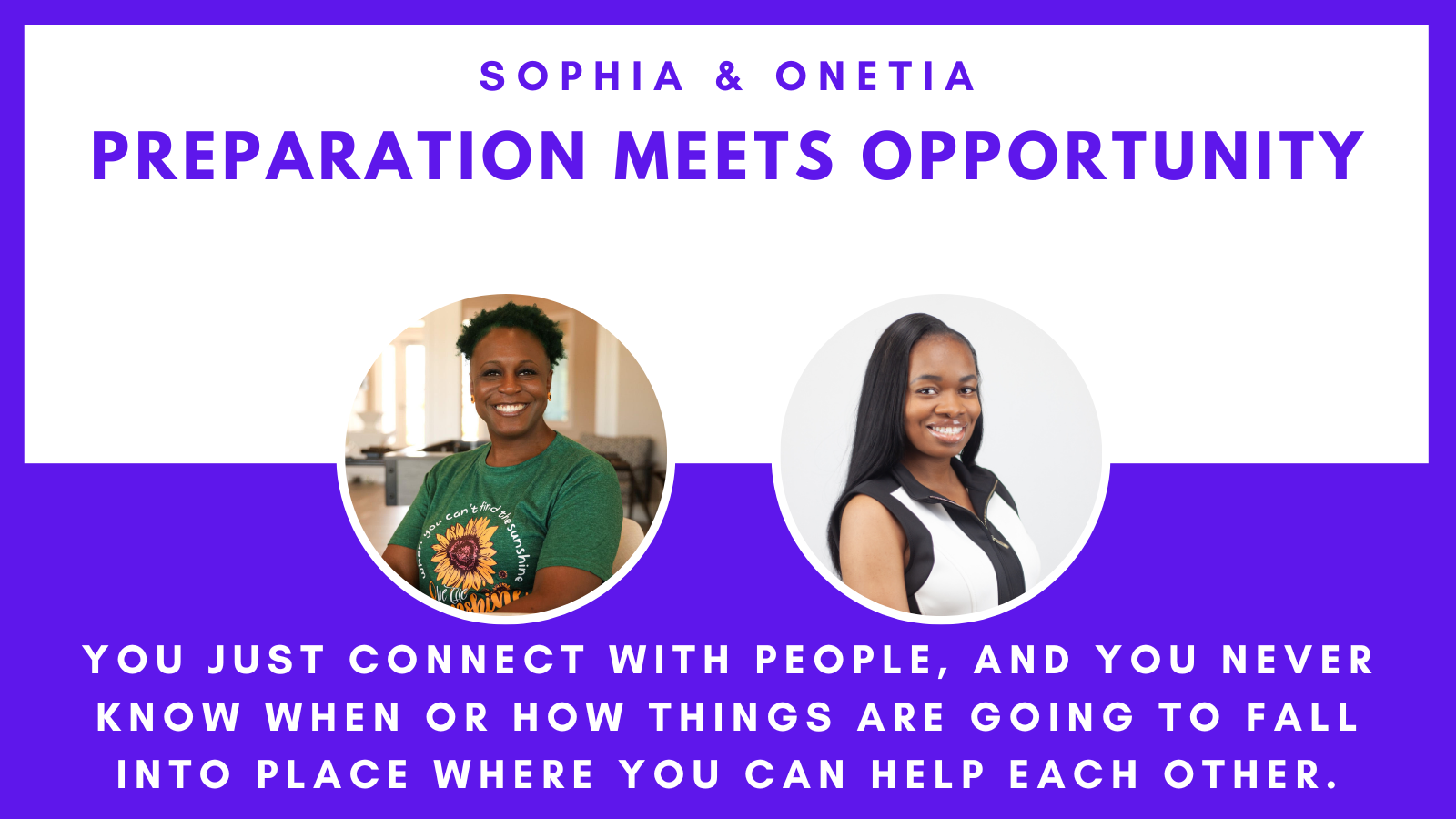
That clarification came up again and again when I sat down with Florida Realtor® Onetia Cameron for The Sacred Sunflower Podcast.
Our conversation started with real estate, but it didn’t stay there. We talked about what happens when information isn’t passed from one generation to the next. We talked about raising children differently, preparing for opportunities we can’t see yet, being afraid to show up, faith, community, journaling, and the strange way life can look completely different when you read something your past self wrote five years ago.
But underneath all of it was one question:
What have we already counted ourselves out of because we assumed the answer was no?
Buying a Home in Southwest Florida Starts With Knowing Your Actual Situation
Onetia told me that one of the biggest things she encounters in real estate is people arriving with a list of reasons they believe they can’t buy a home.
My credit isn’t good enough.
I don’t have a down payment.
I can’t afford closing costs.
Homes in Southwest Florida cost too much.
Some of those concerns may turn out to be relevant. Money matters. Credit matters. Income matters. Debt matters. The actual cost of owning a home matters, but assumptions aren’t the same thing as information.
Credit is a good example. During our conversation, Onetia talked about people relying on scores they see through consumer credit services and assuming that number is the end-all, be-all.
The Consumer Financial Protection Bureau confirms that there is no single universal credit score attached to each of us. Different scoring models, different credit-reporting data, different loan products, and even timing can produce different scores. The score a consumer sees may not be identical to the score a mortgage lender uses. That doesn’t mean a low score should be ignored. It means the question isn’t simply, What number popped up on my phone?
The useful question is:
What does my actual financial picture look like, and what would I need to do from here?
The CFPB recommends that people preparing to buy review their credit reports, look for errors, understand their credit scores, and assess their overall financial situation before shopping for a home. That sounds way less exciting than scrolling through listings and choosing imaginary countertops. It is also the part that gives you information you can actually use.
Your First Home Does Not Have to Be Your Dream Home
One of Onetia’s points stuck with me because it pushes back against another expectation we’ve managed to create around homeownership:
“Your first home is your starter home. That’s not your dream home.”
Somehow, “starter” became a dirty word. People look at somebody else’s finished kitchen, pool, acreage, oversized closet, or beautifully staged house online and start measuring their beginning against somebody else’s middle. A first home does not have to solve every housing need you’ll have for the rest of your life.
Your income may change.
Your family may grow or get smaller.
You may change jobs.
You may move.
Your priorities may change.
Hell, you may change.
Buying something that works for your life now doesn’t mean you have failed to dream big enough. Choosing not to buy yet doesn’t mean you’re behind. That came up later in our conversation when Onetia said something that applies to far more than real estate:
“Your race is your race.”
There it is. Somebody else buying at 27 does not create a deadline for you at 37, 47, or 57. Their house is not your report card.
Moving to Southwest Florida? You Might Want to Live Here Before You Buy Here
This was probably one of my favorite real estate-specific parts of the conversation because Onetia said something you don’t always expect to hear from the person who gets paid when somebody purchases property:
Maybe rent first.
If you’re relocating to Southwest Florida and don’t know the area, she doesn’t believe you should automatically rush into buying.
Her advice was practical: spend six months or a year here if you need to. Go to local events. Learn the different communities. Figure out where you naturally spend your time and which areas actually work for your life.
That makes sense.
Southwest Florida can look very different depending on where you land. Naples is not Arcadia. Arcadia is not Fort Myers. Fort Myers is not Cape Coral. Punta Gorda has its own feel. So does Port Charlotte.
A map can tell you distance.
It cannot tell you whether a place feels like home to you.
Onetia and I both grew up in Florida, moved away at different points, and eventually experienced that unmistakable feeling of returning to Southwest Florida.
I tried to explain it during the interview and couldn’t find a particularly sophisticated word for it.
You just know when you’re home.
There are still places here where a stranger will speak to you for absolutely no reason. Somebody will stop and have a whole conversation. You can live somewhere that is growing rapidly and somehow still have that “big little city” feeling.
You may love that.
You may not.
Find out before you make one of the largest purchases of your life.
That isn’t hesitation.
That’s information.
What Happens When Nobody Taught Us This Stuff?
Onetia’s path into real estate started partly because she learned more about disparities in Black homeownership and wanted to help people in her community understand what might be available to them.
The gap she was responding to is not imaginary.
Using 2024 American Community Survey estimates, the University of Florida’s Shimberg Center reports a Florida homeownership rate of approximately 51% for Black households and 76% for white households.
That does not mean every Black family needs to own property. I want to be very clear about that.
Homeownership is not a moral achievement, and renting is not evidence that somebody didn’t work hard enough.
But disparities like that do make it worth asking who had access to information, financing, property, opportunity, and generational wealth—and who historically did not.
Onetia put part of the problem in much simpler language during our conversation.
Sometimes the information just wasn’t brought down to our generation. There are people who grew up hearing adults talk about mortgages, investments, credit, property, retirement accounts, and how money works. There are also a whole lot of us who learned financial concepts by accidentally bumping into them in adulthood.
What the hell is this?
Why did nobody tell me?
Everybody knew about this?
Somebody in the family has to learn it first, and once we know something, we get a choice about what happens next. We can gatekeep it or we can reach back and teach others.
Sometimes Generational Change Means Teaching the Next Person Sooner
That became especially clear when we started talking about Onetia’s teenage daughter. She wants her daughter to understand credit. She wants her to understand homeownership. She wants her to have access to information at a younger age than many adults had when they were trying to figure these things out for themselves, but the generational shift she is creating is not only financial.
Onetia also talked about intentionally creating a relationship where her daughter can speak freely and come to her without immediately expecting judgment. That opened another part of our conversation. I was raised mostly by my father, and although my Caribbean upbringing certainly included some of the traditional do as I say parenting, my father eventually gave me something incredibly valuable:
Room to be an individual.
I could have thoughts.
I could speak.
I could become more fully myself in his presence.
I told Onetia that being able to be your true self around your parent changes how a child is raised. I also believe information is another way we make room for our children. We don’t have to decide their future for them. We can make sure they have more tools when it is finally theirs to decide.
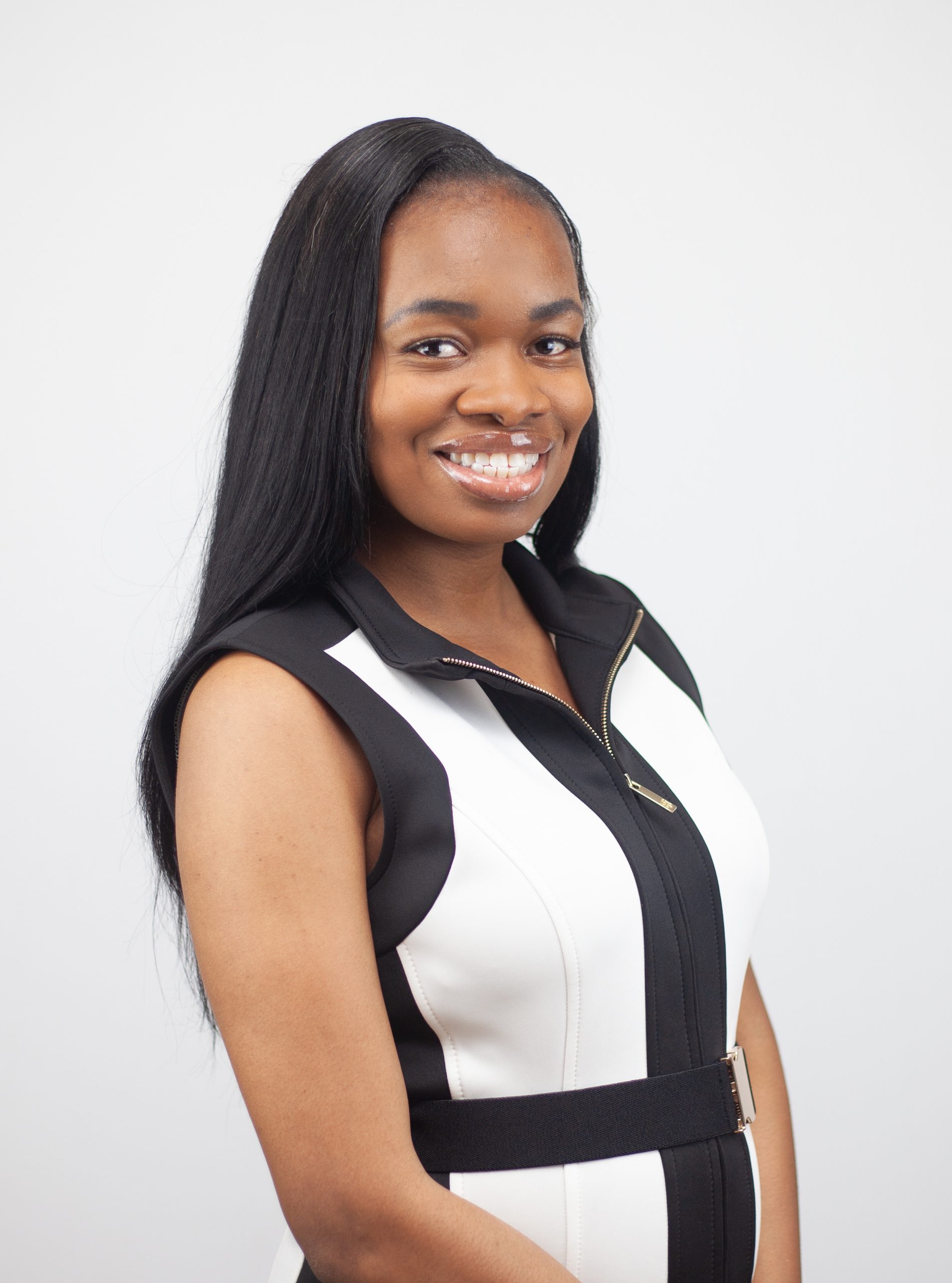
Onetia Cameron
state. With a Bachelor’s degree in Education and more than 15 years of experience in customer service, administration, and client relations, Onetia brings a people-first approach to real estate. Having grown up in Florida, she has a genuine love for the Sunshine State and a passion for helping people find a place they’re proud to call home. Whether working with first-time buyers, sellers, or those relocating to Florida, her goal is to make the real estate process easier to understand, less overwhelming, and more personal.
discovering new restaurants and places around town, bowling, and singing. She believes real estate is about more than buying or selling a property; it’s about people, relationships, and helping others confidently take their next step.
Preparation Meets Opportunity
This is where the title of the podcast episode came from. Onetia has a phrase she uses all the time:
Preparation meets opportunity.
She originally said it while explaining how she became interested in real estate and began learning about things she hadn’t previously known, but that idea followed us through almost every other part of the conversation.
Onetia is preparing for her own future home purchase. She completed her bachelor’s degree as a single mother. She has ideas for community and faith-based events that she knows she needs to stop overthinking and bring forward. She wants to become more visible online even though getting on camera makes her nervous. She has learned that sometimes you prepare before you have any idea what the opportunity is going to look like.
I love that.
Preparation does not mean we control the outcome. It doesn’t guarantee that every door opens. It doesn’t mean everything we write down magically appears. Preparation means that if an opportunity does show up, we are more capable of recognizing it and deciding what to do with it.
Sometimes preparation is exciting.
Sometimes preparation is getting your degree.
Sometimes it is repairing your credit.
Sometimes it is making the phone call.
Sometimes it is admitting you don’t know enough yet.
Sometimes it is spending six months learning a city before buying a house in it.
Sometimes it is simply refusing to let embarrassment keep you from asking a question.
Being Afraid and Doing It Anyway
Onetia gave me one of my favorite examples of this when she talked about traveling to New York with her daughter. She is afraid of heights. Her daughter wanted to walk across the Brooklyn Bridge. Naturally, Onetia’s response was essentially: We’re going to do WHAT?
She went, and she recorded herself doing it. Looking back at that moment became emotional because it reminded her how often she has thought: I don’t know if I can do this. The same thing has been happening in her business. She told me she had been nervous about going live and putting herself on video.
What if nobody watches?
Eventually, she came to another conclusion:
Who cares?
If one person watches and learns something that changes what they believe is possible, that one person matters. That is my favorite kind of visibility.
Maybe somebody needs what I know.
Then She Pulled Out the Journal
At that point, y’all already know what happened to me. Onetia showed me a journal where she has been intentionally writing down what she wants for herself. Not only what she hopes might happen, but what she will do.
One of the statements she had written was:
“My name is in rooms that I can’t even imagine.”
She also told me she recently found an old journal from about four or five years ago, written during one of the darkest periods of her life. Reading it from where she stands now was emotional. The woman writing on those pages had no idea what was coming next.
She didn’t know what she would survive.
She couldn’t see the degree.
The business.
The opportunities.
The confidence she was building.
She certainly could not see herself sitting across from me telling all of you about it. That is one of the reasons I stay on people’s asses about journaling. There is something powerful about having evidence of yourself. I am fine with digital journaling. I am fine with voice notes. I am fine with whatever gets the truth out of your head, and somewhere you can return to it, but handwritten journals will always hold a particular place for me.
Because one day you may sit in another hard season, pull out an old notebook, and see in your own handwriting what you survived.
Nobody rewrote history for you.
Nobody summarized it.
That is your handwriting.
Those are your words.
That was all you.
A Journal Can Become More Than Your Record
You kjnow my end-of-life doula brain took the journaling conversation somewhere else too. I think about what happens to those handwritten pages after we are gone. You may never show anyone your journals while you’re alive. That’s fine. Lock them up. Put instructions in your estate plan. Do whatever feels right for you, but imagine a daughter, granddaughter, niece, nephew, or great-grandchild someday reading something you survived.
Imagine them realizing:
Grandma went through this too.
She was scared too.
She didn’t know what was going to happen either, and here she is telling me, in her own words, how she made it through.
We spend a lot of time talking about generational wealth. Property can be inherited. Money can be inherited, but so can information. So can proof that the difficult thing somebody is living through has existed in the family before and that somebody made it to the other side. That kind of inheritance matters too.
Homeownership Is an Option. Information Should Not Be a Privilege.
That is ultimately where this conversation brought me. I do not want people pressured into homeownership. I don’t want “buy a house” added to the list of things we’re supposedly required to accomplish before society considers us successful grown-ass adults.
I just want people to have options, and options require information. If you genuinely want to buy a home in Southwest Florida but have already decided you can’t, you may not need someone to convince you that you can. Maybe, after getting actual information, you’ll discover that you weren’t as far from the possibility as you thought.
You Might Be in a Different Part of the Process
Near the end of our conversation, Onetia talked about ideas she has been holding onto and the community work she wants to create. I told her to think about a tree. We love fruit. Fruit is the visible part. Fruit is what gets photographed. Nobody is excited about staring at roots, but before the fruit, something has to be planted. Then it has to be watered. Cared for. Nurtured. Then there comes the pruning, and pruning is uncomfortable as hell because something is being cut before we can see what will grow in its place. Only then do we eventually get fruit.
You might be watching somebody else’s harvest while you are still planting. That does not mean you’re behind.
Maybe you’re learning.
Maybe you’re saving.
Maybe you’re repairing.
Maybe you’re asking questions.
Maybe you’re starting again.
Maybe you’re scared and showing up anyway.
Maybe you’re finally sharing information somebody in your family will never have to discover accidentally because you learned it first.
Onetia said two things during our conversation that I think belong together:
“Preparation meets opportunity.”
And:
“What’s for you won’t pass you by.”
Her faith is central to the way she understands both of those statements. Whatever language you use for your own life, I think there is something worth taking from them. You don’t have to know exactly how the story ends to prepare for the possibility of something different. That preparation is the work.
Maybe the fruit isn’t late.
Maybe it just isn’t fruit season yet.




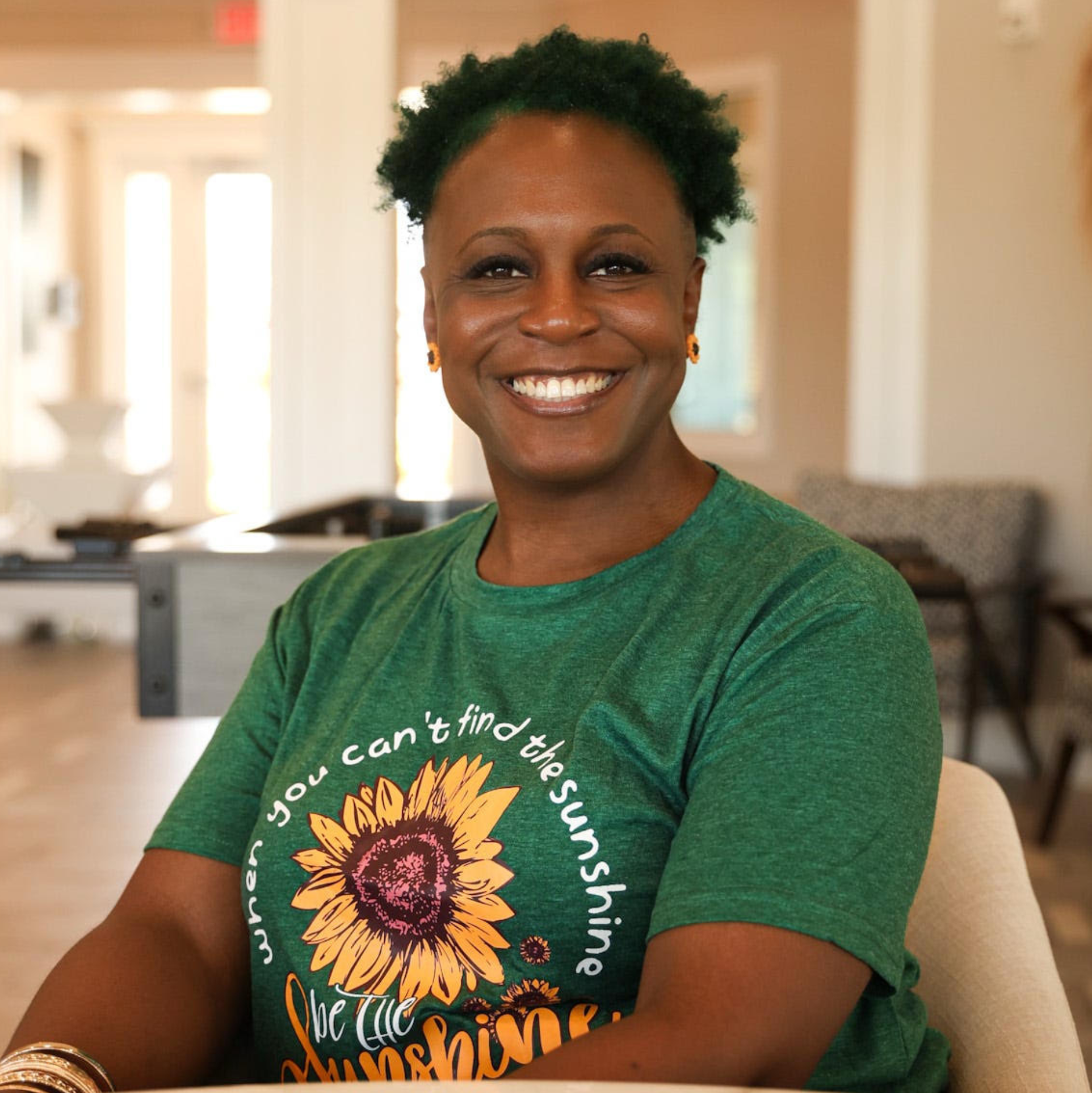
Sophia Antoine
Wellness Practitioner
Sophia Antoine is a full-spectrum doula, wellness coach, relationship coach, and founder of Sacred Sunflower Wellness Solutions. She creates soft-but-honest spaces for people navigating birth, postpartum, grief, chronic illness, emotional wellness, relationships, and major life transitions. Her work is rooted in autonomy, self-awareness, reproductive justice, and the belief that people deserve to feel supported, heard, and cared for while they are still in the middle. Through Serenity Before Sunrise, Sophia offers reflections, workbooks, and gentle practices for those learning how to stop rushing past themselves and return to their own care.
0 Comments