
Content Note & Disclaimer
This episode includes a candid conversation about domestic violence, emotional and psychological abuse, coercive and controlling behavior, trauma, relationship conflict, and healing after an abusive relationship. Some portions of the conversation may be difficult or triggering for listeners.
Jatill Antoine is sharing her personal lived experience and her understanding of the events, relationships, and circumstances she experienced. Her story belongs to her, and this conversation is presented in that spirit. The experiences, opinions, interpretations, and perspectives expressed by our guest are her own and should not be understood as universal descriptions of domestic violence, LGBTQ+ relationships, trauma, or survivorship.
The Sacred Sunflower Podcast does not provide legal, medical, mental health, or domestic violence intervention services through this episode. Nothing discussed should be considered professional advice or a substitute for individualized support from a qualified professional or domestic violence organization.
Every survivor’s circumstances are different. Decisions involving an abusive or potentially abusive relationship can involve significant emotional, financial, legal, and safety considerations. We encourage listeners to make the choices that are safest and most appropriate for their individual circumstances and to seek professional support when needed.
Please take care of yourself while listening. You are welcome to pause, skip portions of the conversation, or return to the episode at another time.
Domestic violence and LGBTQ+ affirming support resources are included in the episode show notes.
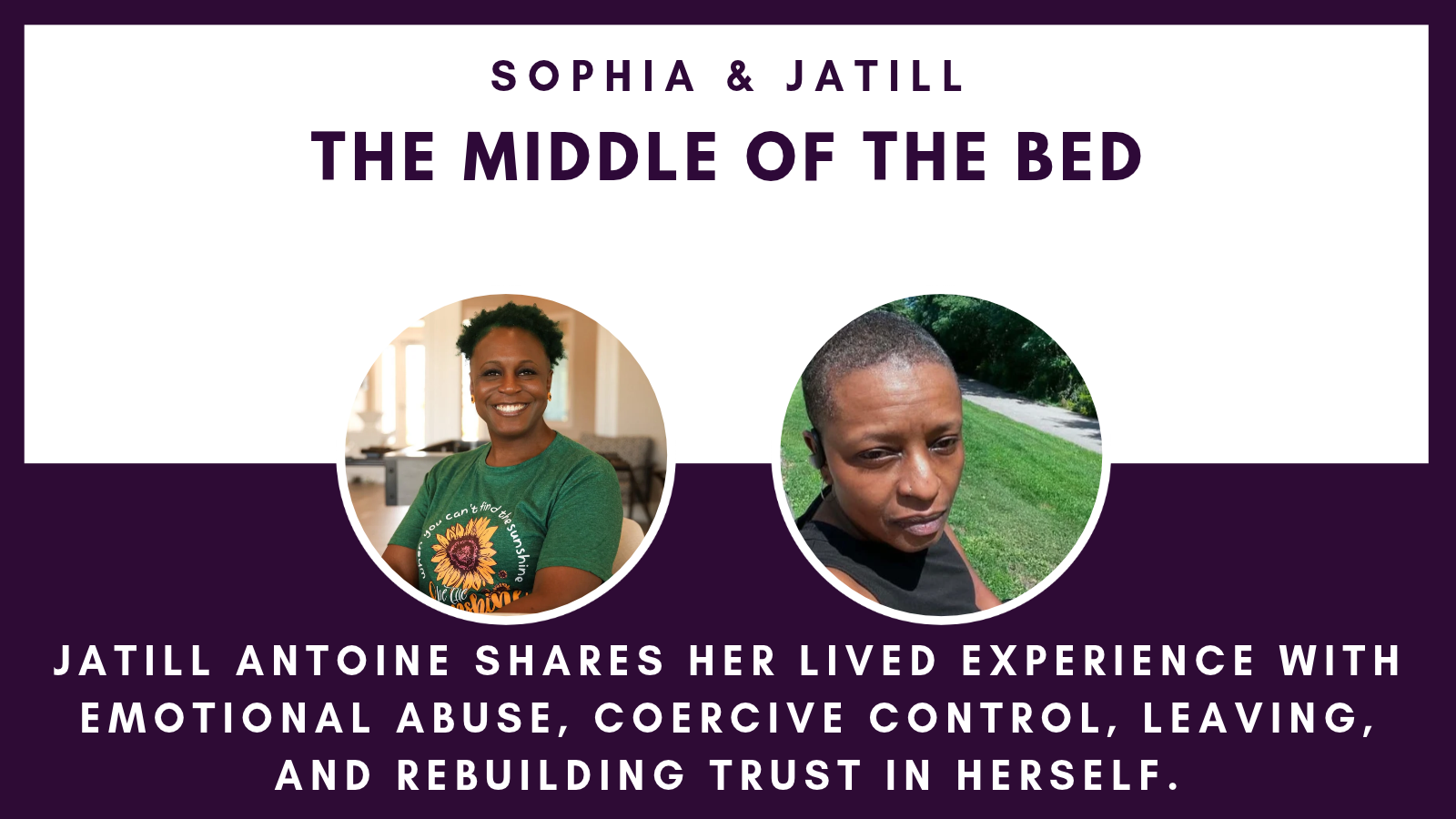
The Middle of the Bed: Domestic Violence in Lesbian Relationships with Jatill Antoine
There are freedoms most of us don’t think of as freedoms. Watching an entire movie without somebody talking in your ear. Cooking something because you want it. Turning your phone off because you don’t feel like talking. Going to the bathroom without somebody following you in to continue a conversation. Sleeping wherever the hell you want to sleep in your own bed. Those things sound small until you’ve lived in a relationship where they weren’t.
When Jatill agreed to be my guest to talk about domestic violence in lesbian relationships, we talked about the things people usually expect to hear in a conversation about abuse: emotional and psychological abuse, coercive control, money, manipulation, isolation, boundaries, fear, and the complicated reality of leaving, but some of the moments that stayed with me came much later in our conversation, when we weren’t talking about leaving anymore.
We were talking about living.
Jatill told me she watches movies now and nobody is talking in her ear. She cooks for herself after spending so much time cooking for other people. She can turn her phone off, leave it on silent, and can decide when she simply doesn’t want to talk.
Then she said:
“I discovered the middle of the bed.”
It was funny when she said it. I understood exactly what she meant, but there is a whole lot sitting within that sentence.
Early in the interview, Jatill described different ways control had worked its way into ordinary parts of her relationship. There was the money, food, conversations, personal space, and her ability to disengage when she no longer wanted to participate in an argument. At one point, she summed up the way she understands domestic violence very simply: The overall thing is about control.
At another point in our conversation, Jatill got quiet and said, I’ve learned to breathe again.
That’s the part of conversations about domestic violence I don’t think we hear enough.
We talk about recognizing abuse. We talk about leaving. We talk about surviving. What about the life that comes afterward? What happens when you start noticing that your time belongs to you again? Your space belongs to you. Your attention belongs to you. Your choices belong to you. What does it feel like when you no longer have to make yourself smaller to make a relationship work?
This episode is Jatill’s answer to those questions. Not a universal answer. Not a clinical definition of what every abusive relationship looks like.
HER. ANSWER.
Her lived experience of loving someone, recognizing what that relationship had become, eventually leaving it, and discovering pieces of herself, and her freedom, that had been there all along.
Domestic Violence Isn’t Always Physical Violence
Early in our conversation, Jatill said something that made both of us laugh, but she wasn’t joking about the point she was making. When people hear domestic violence, she said, they often think only about the physical part, but underneath that? In her words, there is an “umbrella of shit.”
That description totally works because one of the reasons Jatill wanted to have this conversation was to talk about everything that can happen in a relationship that may not leave a visible bruise. She talked about coercive control. Financial abuse. Intimidation. Emotional abuse. Sexual expectations and pressure. Being made to feel dependent. Having ordinary choices slowly stop feeling completely like your own.
She was careful about repeatedly coming back to her own experience. When the conversation reached coercive control, Jatill didn’t try to position herself as the person who could define everybody else’s relationship. She said that the examples she could give were examples of what happened in her marriage.
Jatill described times when intimacy felt expected because they were married, including situations where she did not feel comfortable with what was being asked of her. She talked about the way repeated expectations can affect what someone begins to believe they are supposed to do in a relationship.
She also talked about money. Before this relationship, financial abuse was something she understood one way. Living through her marriage gave the phrase a different meaning. She described a relationship in which her partner controlled the finances, while Jatill contributed money each month without having the same control over where it went. Later in the interview, she described that financial arrangement as one of the reasons she felt trapped.
Then there was intimidation. Jatill said she once thought physical abuse meant two people actually fighting. Her understanding changed after the marriage ended. When she looked back, she remembered arguments that included slamming things and breaking furniture, even though, as she was clear to say, her former partner never hit her.
Sometimes we are looking for the one thing we have been taught is supposed to count:
Did they hit you?
If the answer is no, everything else can become easier to explain away. Maybe they’re just jealous. Maybe they’re bad with money. Maybe they have a temper. Maybe they love hard. Maybe the argument got out of hand. Maybe you’re overreacting. Maybe this is simply what relationships are like. Meanwhile, your world keeps getting smaller.
Near the end of our conversation, Jatill shared something her former partner used to tell her:
You’re all alone in the world, but I’m your family.
That sentence carried weight because she grew up in the foster care system and described having complicated ties with her family. Looking back, she now understands those words differently. She described them as creating dependency, the idea that the person hurting you is also the person you have been convinced you cannot live without. That brings us back to the word Jatill kept returning to throughout the interview:
Control.
While describing everything from food to money to conflict, she said:
The overall thing is about control.
Her story is not an argument that every difficult relationship is abusive. They became patterns. They affected her choices. They affected her sense of freedom. Over time, they changed the amount of room she felt she had inside her own life. That is why this conversation can’t begin and end with whether somebody got hit.
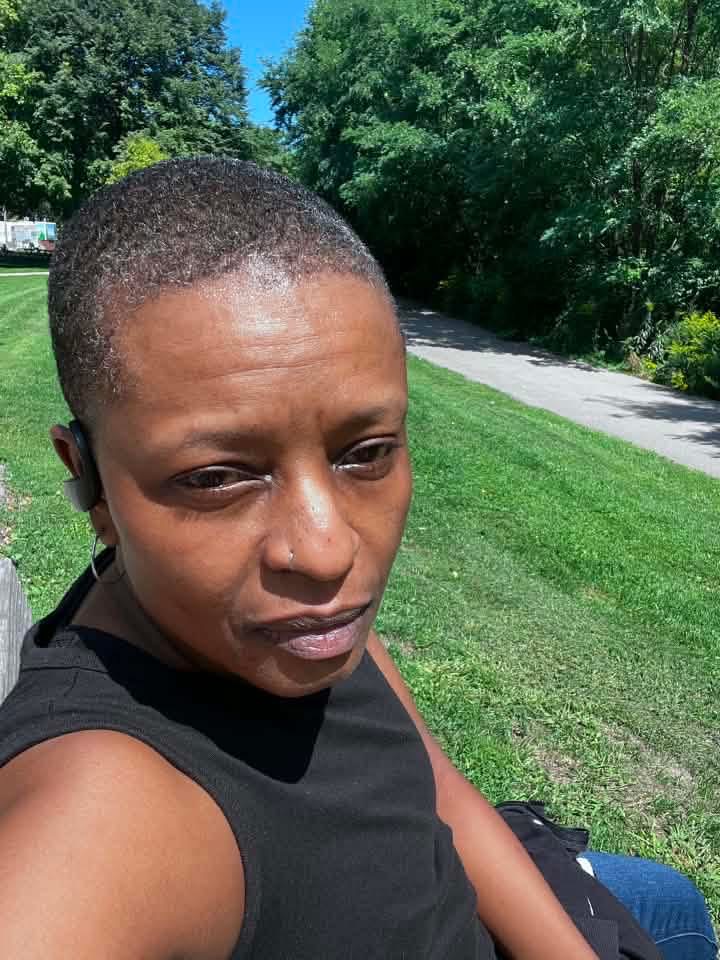
Onetia Cameron
Jatill Antoine is a yoga coach, wellness professional, poet, and advocate for personal transformation. Her work centers movement, mindfulness, intentional living, and helping people reconnect with themselves in ways that support a healthier, more grounded life. She is especially passionate about encouraging people in their 40s, 50s, and beyond to stay active, strong, engaged, and connected to their own well-being.
Jatill also speaks openly about healing, self-worth, boundaries, difficult relationships, and the process of learning to choose yourself without losing yourself in the process. Drawing from her own lived experience, she brings honesty and compassion to conversations about personal growth, identity, and rebuilding after seasons that have changed you. Through yoga, wellness, writing, and real-life conversations, she encourages others to honor where they’ve been while becoming more intentional about where they’re going.
When Control Becomes Part of Everyday Life
One of the things that stood out to me while listening to Jatill tell her story was how ordinary some of the details sounded. Groceries. Dinner. Money. Those aren’t things we normally think of when somebody says domestic violence, but that’s exactly why the details matter.
Jatill described reaching a point in her marriage where she felt trapped, not only because of what was happening emotionally, but because control had become part of the practical structure of their life. She told me that her former partner had positioned herself as the breadwinner while Jatill contributed money every month without having the same control over what happened with it.
She also described control over something as basic as what they ate and bought. During one part of our conversation, while talking about grocery shopping during the pandemic, Jatill almost added it as an aside:
Failed to mention, she also controlled what we ate and bought.
That’s the thing about stories like this. Sometimes the sentence that tells you the most isn’t delivered like some dramatic revelation. It’s just another thing on the list. Another decision that wasn’t entirely yours. Another part of everyday life that somebody else had a say in. Over time, enough of those little things can stop feeling little.
Jatill described the relationship as becoming increasingly difficult until she eventually moved into the guest room.
“I was trapped. I felt trapped.”
That word, trapped, came up more than once during our conversation, and it wasn’t limited to finances. One of the clearest examples came when Jatill described an argument during which she decided she didn’t want to continue a conversation. She told her partner, “I don’t want to talk to you when you are like this.” Then she tried to leave the interaction and go into another room. Before she could close the door, Jatill says her partner put her foot in the doorway to stop it from closing. Underneath all the yelling and everything that happened was a very simple request: I don’t want to have this conversation right now.
She was trying to disengage. She was trying to create space and according to Jatill, that space wasn’t being respected. That gives even more meaning to something she says much later in the interview, when she’s describing her life now:
- She can turn off her phone.
- She can sit in silence.
- She can decide she doesn’t feel like talking.
- She can go into another room.
- She can close the damn door.
Those things don’t sound revolutionary until you’ve experienced what it feels like when somebody repeatedly acts like they are entitled to your attention, your response, your explanation, or your presence.
Jatill also described arguments where her former partner would slam things and break furniture. She was very clear that her former partner did not hit her, and that distinction was important to her, but looking back, Jatill said her own understanding of intimidation and physical abuse had expanded beyond the narrow definition she once understood.
I’m not interested in taking Jatill’s story and turning every moment into a checklist. Neither was she. What interested me was the accumulation. Someone can hear one story and say: Well, couples argue. Of course they do. Someone can hear another and say: Lots of couples disagree about money. People disagree about groceries. They annoy each other. They get jealous. They have bad communication. They hurt each other’s feelings. They have ugly arguments. The existence of conflict alone doesn’t tell us the whole story of a relationship, but Jatill wasn’t describing one disagreement.
She was describing what she experienced as a pattern, one that gradually affected how much freedom she felt she had inside her own home and her own life. When you listen to her tell the whole story instead of pulling one incident out at a time, you begin to understand why she keeps coming back to control. Because, for her, the question eventually became much bigger than: Are we fighting?
The question becomes: How much say do I have over my money? My food? My space? My time? My body? My decision to walk away from an argument? That’s a very different conversation. It also brings us directly to something Jatill was especially determined to talk about: what happens when abuse occurs between two women and why people may be slower to recognize it, believe it, or even know what to call it.
Domestic Violence in Lesbian and Queer Relationships
Jatill knew exactly what kind of domestic violence conversation she wanted to have when she came on the podcast. She wasn’t trying to speak for every LGBTQ+ person or every queer relationship. She came to talk about what she knows: Domestic violence in lesbian relationships.
Jatill described herself, with a laugh, as an average queer little lesbian living in Milwaukee who is still going through everyday life and healing. Then she told me why she wanted to have this conversation publicly in the first place. She had experienced too much to keep quiet about it. She knew she couldn’t be the only one.
Jatill acknowledged that domestic violence can also occur in relationships involving gay men, transgender people, and other members of the queer community, but she was intentional about staying close to the experience she could actually speak from: “I’m here to speak about domestic violence in the lesbian community.” That matters because saying abuse can happen in any relationship is one thing and talking honestly about what can make it difficult to recognize, discuss, or respond to abuse within a particular community is another.
Toward the end of our interview, she talked about how trapped and unable to speak she once felt, and then considered how many other people could be living through something similar, especially in queer relationships. Because, as she put it: they just think it’s two girlfriends fighting. The relationship can get reduced at best; minimized at its worst:
Oh, they’re just arguing.
That’s relationship drama.
They’re going back and forth.
They’re both women.
Suddenly the conversation becomes about two girlfriends who can’t get along rather than whether one person is living within an ongoing pattern of control, intimidation, fear, or loss of autonomy. The impact doesn’t become smaller simply because both people in the relationship are women.
Who Do People Assume Is the Aggressor?
Jatill also raised another layer that isn’t always discussed when we talk about domestic violence in lesbian relationships: What happens when people decide who they think the aggressor is before they understand what happened? Jatill told me that she previously presented more masculinely and that she typically dated women who presented more femininely. So, she asked, when law enforcement arrives at the door and sees the two of them: Who do you think they’re going to look at? Her concern was that people might make assumptions based on gender presentation rather than the dynamics of the actual situation.
Then she added another part of her experience.
Race.
Jatill said that in an interracial relationship, she worried that being the Black partner could also affect who someone instinctively perceived as threatening or aggressive. That part belongs in the conversation because domestic violence doesn’t happen in some identity-free vacuum.
People walk into relationships with histories and when something goes wrong, all of those things can affect how a person believes they will be perceived and whether they feel safe asking someone else for help.
Being Believed Can Become Part of the Story
What happened when she tried to tell people close to her about what was happening at home One friend’s initial reaction was disbelief. Her former partner seemed sweet. That friend couldn’t picture the person Jatill was describing. Then one day, while Jatill was on FaceTime with her, the friend heard an interaction for herself. That changed things.
The person your friends meet may not be the person you experience during an argument. The couple people see in pictures may not tell them anything about what happens behind closed doors. A person being pleasant, likable, or funny in public does not automatically tell us what previous experiences with them have been.
Queerness Doesn’t Make a Relationship Safe or Unsafe. This conversation is not an indictment of lesbian relationships. This podcast episode isn’t a warning that queer relationships are inherently dangerous. Most of all, Jatill wasn’t suggesting that.
I told her that relationships are relationships. Regardless of whether someone is heterosexual, gay, queer, bisexual, or anything else, we’re ultimately talking about how people treat one another and whether they respect each other’s humanity. Jatill agreed. The problem isn’t queerness.
The problem is that being queer does not somehow make people immune from unhealthy relationship dynamics, abuse, coercion, manipulation, intimidation, or control. Love between women is still love. Conflict between women is still conflict. Abuse between women is still abuse. We should be able to say all three without treating any one of them like a contradiction.
Why Jatill Chose to Speak
What ultimately pushed Jatill toward speaking publicly wasn’t simply that she had survived a difficult relationship. It was recognizing the silence around it. She described a point after her divorce when another experience with domestic violence became a catalyst. She started thinking about the fact that she had once felt unable to talk and trapped inside what she was experiencing.
She thought about everyone else who might feel exactly the same way. People whose relationships aren’t being taken seriously. People questioning whether what they’re experiencing counts or matters. People who think nobody will believe them. People whose situations have been reduced to just two girlfriends fighting.
Jatill decided she wanted to talk. Nobody has to turn the worst thing that happened to them into advocacy, education, inspiration, or a lesson for somebody else. Nobody owes the public their trauma, but Jatill chose to use her voice this way. The silence wasn’t the only complicated part. Leaving was complicated because once you recognize that something is wrong, recognizing it and being ready to walk away from it are two very different things.
Why Leaving Isn’t One Simple Decision
Why didn’t you just leave?
Listening to Jatill tell her story makes it pretty clear why just doesn’t belong anywhere in that sentence. Leaving wasn’t one decision or realization. It definitely wasn’t as simple as recognizing that something was wrong, grabbing a suitcase, and walking out the door. Jatill had built a life, years of memories, and financial responsibilities. She made a conscious decision to let go of a future she expected to keep living.
That was home. Home carried even more weight for Jatill because of the childhood she came from. She grew up in foster care. So when she became an adult, stability wasn’t some abstract nice-to-have. It meant something.
Jatill eventually realized that the cost of keeping that home had become too high. What happens to everything you’ve spent years building? Even after Jatill began moving toward divorce, she admitted she still didn’t know how she was going to survive financially.
That matters because leaving somebody doesn’t erase the love that once existed. It doesn’t erase the good years. It doesn’t erase hope. It doesn’t erase the part of you that once believed things could get better. It doesn’t even erase the desire to protect the life you’ve already invested so much in.
Jatill didn’t describe one moment where she was suddenly ready. First, she moved into the guest bedroom. She tried to create space during arguments. She took a month-long trip back to California to give them both some distance. She let friends know what was happening. Eventually people around her began helping her figure out what leaving could actually look like. Jatill also talked about support from members of her church and from therapists who helped her navigate the divorce process. One therapist even accompanied her to the courthouse when she filed her papers.
The more important part of her story isn’t that she finally made the “right” decision. It’s understanding that she had to reach a place where leaving became possible. After she physically got out, another kind of work was waiting for her. Leaving a relationship doesn’t automatically give back everything you lost inside it. You still have to learn how to trust yourself again.
I’ve Learned to Breathe Again
Toward the end of our conversation, Jatill told me about the 20 minutes she spent meditating before we recorded. Everything was off. Just quiet. While sitting there, she had a realization: I’ve learned to breathe again.
She talked about feeling as though her nervous system had only recently begun to settle and about how much she slept after coming out of the relationship. Just the recognition that quiet feels different now and so does rest.
Jatill doesn’t describe herself as a victim. She doesn’t even particularly identify as a survivor. Her word is thriver. She told me she’s been turning inward, writing poetry, reading, meditating, and continuing to build a life that feels like hers.
Discovering the Middle of the Bed
Jatill was talking about simple things she enjoys now when she said: I discovered the middle of the bed. We laughed. Because yes, the middle of the bed is nice. You can stretch out. Turn whichever way you want. Take up an unreasonable amount of space and steal all the covers if that’s what your heart desires. I also understood why that sentence mattered. Jatill was finally enjoying her bed, her space, and her life.
And Now, it’s Time to Bloom
As we were wrapping up the interview, I told Jatill: Now it’s time for the blooming. Not because suffering automatically produces growth. I don’t believe people have to turn painful experiences into something beautiful to make those experiences worthwhile. I meant that Jatill had spent enough of our conversation telling us about a chapter of her life that was very hard for her. I wanted to hear about what she intends to do with the life that is hers now.
I will continue to shine my light.
She has her poetry. She has her wellness. She has her business.
Helping somebody else feel a little less alone if her story happens to reach them. Jatill came to The Sacred Sunflower Podcast willing to tell the truth about a deeply personal part of her life.
Only she gets to decide what comes next. There is room to breathe. There is plenty of space in the middle of the bed.
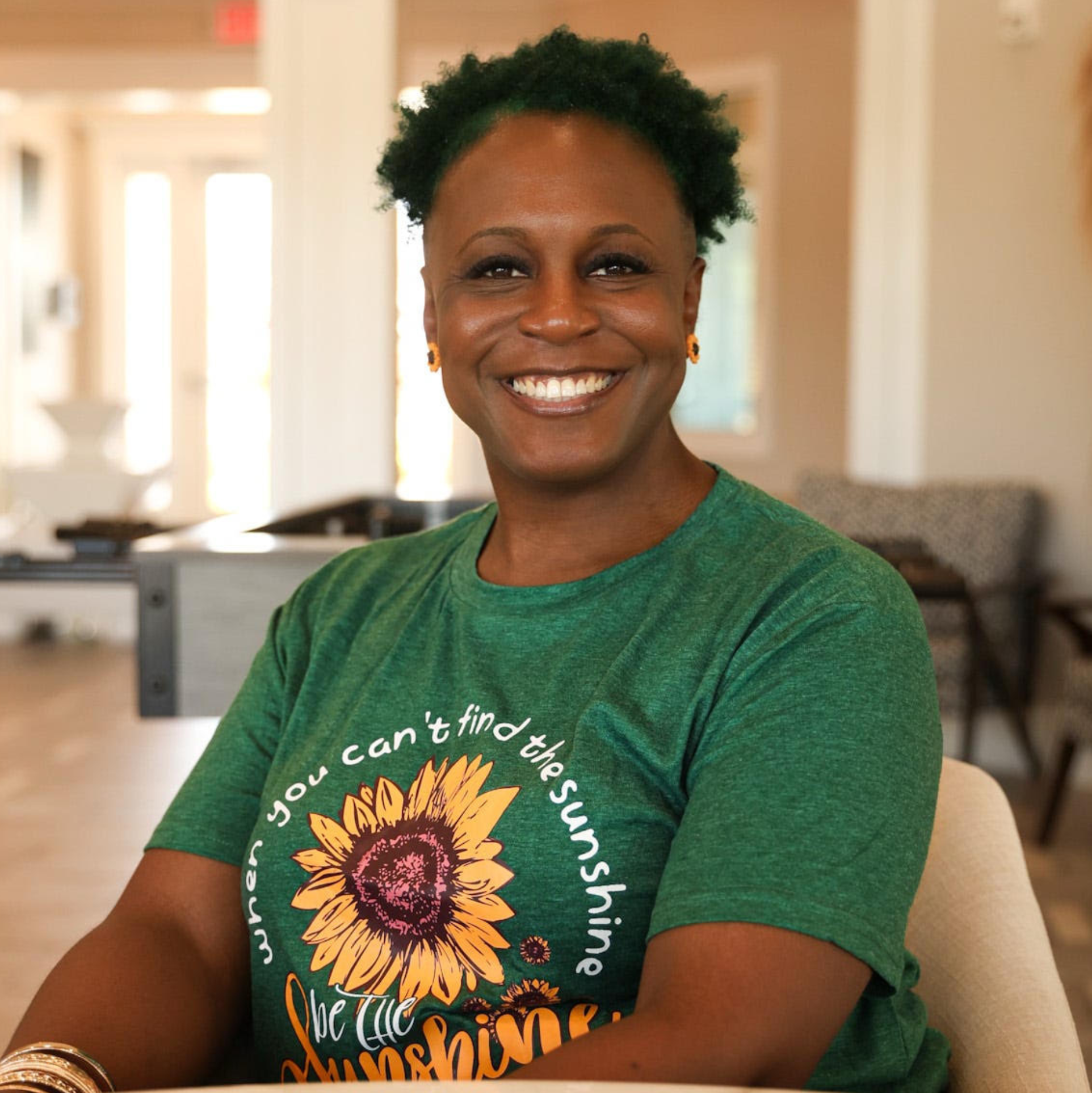
Sophia Antoine
Wellness Practitioner
Sophia Antoine is a full-spectrum doula, wellness coach, relationship coach, and founder of Sacred Sunflower Wellness Solutions. She creates soft-but-honest spaces for people navigating birth, postpartum, grief, chronic illness, emotional wellness, relationships, and major life transitions. Her work is rooted in autonomy, self-awareness, reproductive justice, and the belief that people deserve to feel supported, heard, and cared for while they are still in the middle. Through Serenity Before Sunrise, Sophia offers reflections, workbooks, and gentle practices for those learning how to stop rushing past themselves and return to their own care.
0 Comments